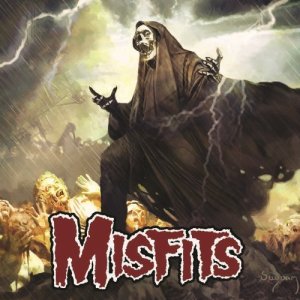
In 1977 Glenn Danzig combined some buddies, an imagination fuelled on horror-movies and comics, and a penchant for writing brutally catchy punk/metal music to form The Misfits, the original Horrorpunk band. Six years later, he dissolved the group, leaving an enormous impact on metal music – and his fans to deal with the fallout. Danzig brought authenticity and brutality to his pop-soaked horror-imagery, approaching his subject matter with a seriousness and starkness that the revived band’s revolving-door of singers has perpetually struggled to resurrect ever since. On The Devil’s Rain, as on every release since The Misfits’ comeback in 1997, we’re dealing with a very different band.
Original bassist Jerry Only writes the lyrics now, and since 2003’s surprisingly successful 50’s cover album Project 1950 he’s been in charge of vocals as well. This doesn’t necessarily spell doom for the band: while he lacks the charisma and force of Danzig’s Elvis-wail or even the latter (teenage!) Michael Grave’s energy, Only’s voice is serviceable: somewhere between a shout and a croon, honed over decades of backup singing, though TheMisfits clearly suffers without its trademark vocal frenzy. Only is aware of his success on Project 1950, and it shows in his affinity for sustained harmonies and song-structures that hew remarkably closely to their Project 1950 precursors (of which the extremely pop-y “Monkey’s Paw” ends up a standout track). When his vocals hit their mark, Only’s only major problem (and by extension that of the band) is a lack of ingenuity: at best The Devil’s Rain chugs along consistently, a fine companion to that post-Hallowe’en party of yours. At its worst, whichever songs don’t repeat themselves ad nauseum (“It’s cold in hell!” x 18), sound nearly identical, and not in a “well-alright-it-is-Punk” way, but as more of a “oh-right-these-guys-play-in-Osaka-Popstar” variety of boggling tempo and chord repetition.
Then again, there’s a solid chance none of this will bother you: anyone exclusively a post-formation Misfits fan is likely to find more than enough to enjoy here (and can probably increase that score a little). Only takes more joy in playing with classic horror tropes than he does getting all worked up and angry, and that’s perfectly alright – the result is simply a lukewarm band more suited to playing over Hallowe’en barbecues than mosh pits.
C+
Originally published in The Peak, November 2011.
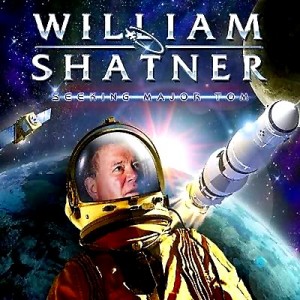 Pop Culture Alert: William Shatner – yes that Shatner – just released a concept album about the ongoing adventures of Bowie’s Major Tom, made up of covers that famous people helped him record, and it’s actually good. Go ahead, roll your eyes! I’ll wait, because Seeking Major Tom is the silliest and most sincere spoken-world album you’ll hear this year.
 When Opeth dropped Damnation back in 2003, they took what the industry calls a leap of faith: they released an album with no double-kick violence, no head-banging metal riffs, and most disconcertingly no death-growls at all. Opeth had always been a band of extreme dynamics, of classical flourishes sunk deep within the tropes of death metal and unified by prog-rock composition and the twin virtuosic voices of singer Mikael Åkerfeldt. On Damnation the setting-aside of Åkerfeldt’s growl was the elephant in the room, Opeth’s usual ferocity instead supplanted by mellotron grooves and jazz-fusion drumming (frequently with brushes). The response was overwhelmingly positive: Opeth had released their first ‘clean’ album – an oddity they had already offset with its sister piece, the previous year’s super-heavy Deliverance. Since then, each of their albums has increasingly embraced their softer aspects, and on Heritage Åkerfeldt finally cements that their ‘clean’ albums need no longer be treated with scepticism (nor apologetic companion albums): his band has matured into a genre-blending juggernaut just as capable of eliciting a reaction with organs and brush-drumming as with death metal bravado.
 Transylvanilla