 Disclaimer: Dungeons of Dredmor is a roguelike. Dungeons of Dredmor is not for the faint of heart. Have you played Nethack? Did you cringe in grudging respect at the boot-to-the-neck difficulty of games like Chocobo’s Dungeon (okay, more like Shiren the Wanderer)? This game is for you. Do not read the rest of this review:
 for the next day, buy it for charity and be on your way. DoD is a roguelike, and all reviews of roguelikes are contractually obligated to begin with “back in my day…”, so here goes:
Back in my day, games were really darn tough. Okay, well that’s not quite true: Donkey Kong Country gave me plenty of red balloons, rings were plentiful in Sonic the Hedgehog, and I never lacked for bullets in Blackthorne or phoenix downs in Final Fantasy. In fact, I think I missed the golden era of sadistically cruel PC gaming altogether – good thing, then, that games like Dungeons of Dredmor exist to remind us neophytes that sometimes, just sometimes, games want to kill you.
For the uninitiated, The Roguelike (as the name suggests) is a genre united in its homage and imitation of the 1980 PC title Rogue. As a sub-genre of adventure and rpg gaming, roguelikes typically include elements like top-down and turn-based gameplay, relatively simplistic graphics (though there are exceptions), and wide-ranging opportunities for roleplaying improvisation. There are also wide-ranging opportunities for highly-creative death, and weaker games in the genre have been rightfully accused of artificially manufacturing replay value via their constant Game Over screens. Completely unrelated games, bearing in mind roguelikes’ trademark difficulty, have also emerged as homage to the genre itself: Demon’s Souls springs to mind, as does PSX oddity Dragon Valor and the Dreamcast’s Evolution. Regardless, it is into this proud tradition that games like Dungeons of Dredmor are born: they carry the standard of turn-based dungeon exploration, customizable and highly strategic gameplay, and the save-game-erasing schadenfreude of permadeath.
“So what’s Dungeons of Dredmor actually like?” you ask. Good question! Allow me to regale you with the epic saga of Vancepire I the Vampire, my sneaky blood/flesh-mage and double-knife wielder, and his brief, sad life. Things started out very promisingly for Vancepire! After playing through the lengthy tutorial (a must, as it’s helpful and hilarious), he was dumped into the eponymous dungeon between two modern vending machines: one labeled FÜD, the other DRINK. Broke as a stone, he ignored them, and proceeded into the next room. The tile-based gameplay means every single gameplay action is discrete: you walk a square, every other thing in the dungeon walks a square. You scarf down a Dire Sandwich (for health!), they open a door. You chug a Sewer Brew or a Dwarven Gut Rot (to restore magic energy of course), and by this point they’ve reached you and punched you in the gut. Vancepire, equipped with his two knives and his Flippy Floppies (“great for a day at the pool!”), meandered into the next room, and was confronted by one of many, many Diggles, whose description blurbs read as follows: “A strange little bird-thing that tunnels through walls with its odd, rubbery nasal appliance”. Charming. Vancepire, whose player-chosen skills varied from Assassin (increasing critical hit-chance) to Vampire (which could have eventually earned him the ability to fire Twilightian sparkles at enemies), wound up with his two knives and smacked that Diggle right across its horrible rubbery nasal-appliance face. The Diggle struck back. Vancepire swung again and missed, the Diggle struck back, and several of its friends showed up out of the shadows. At this point, a smart player would have realized that Vancepire the Vampire could only heal via blood-drinking. I was not a smart player. Vancepire ate a Diggle Egg he’d found. This seemed only to anger the Diggle mob further, and restored exactly 0 health. The Diggles swarmed. Vancepire swung around like an idiot. The Diggles – with their jeering overhead text-taunts of “Your mother is a radish” and “Why does nothing love me” – very gradually and embarrassingly killed him dead. Being a roguelike, Dungeons of Dredmor defaults itself to permanent death (permadeath), and so, as Vancepire I hit the floor, the game promptly wiped my save file, dropped a banner reading “CONGRATULATIONS! YOU HAVE DIED!”, and booted me to the title screen. Thus ended the brief, sad life of Vancepire I. His son and grandson, Vancepires II and III, fared only slightly better.

What have we learned? Dungeons of Dredmor, on its medium setting (“Dwarvish Moderation”, there are also “Elves Just Want To Have Fun” and “Going Rogue”), is absolutely punishing to newbies. I cannot stress enough that this is awesome. There’s a very detailed breakdown of the various effects of the difficulty levels here, and while the game is certainly challenging on any difficulty level, the tutorial very explicitly lays out that this is the point. Like the recent oddball Binding of Isaac, gameplay in DoD, on its default settings, encourages experimentation and cumulative learning. Not long after the tragic death of Vancepire I (and II, and III), I was picking my stats carefully, trying all the mushrooms, breezing through the first couple dungeon floors, and not only confident in my newfound skills, but having a complete blast. Strategic play is heavily emphasized here, and while you’ll find hundreds of various pieces of loot (equipment and items, most of them fraught with puns), your statistical breakdown will render only certain items strategically advantageous – for some players this will mean avoiding alcohol or swords entirely, for others never being able to heal (see above). Limiting loot exposure like this lends DoD‘s often-brief repeat playthroughs real variety; the player is never locked into a particular playing style, and the cleverly self-aware class system (Flesh Mage! Mathemagic!) results in an honestly surprising amount of replay value. While limited in scope (plot? what plot?), Dungeons of Dredmor, with its hilarious enemies and mysterious item drops (Grunge Ear?) lends the player a terrific sense of discovery; after nearly ten hours of play (and, full disclosure, zero completions) I’m still finding myself booting up a new character and thrashing through that first floor of Diggles in order to try out new stat/perk combinations and – why not? – taste all the mushrooms.
Aside from general structure, Dungeons of Dredmor is a mechanically sound and simple game. One-handed mouse-play is entirely possible, provided you’re equipped with a right-click, and the game lends itself wonderfully to slow, extended play-sessions while you chat with friends in another window – I’ve found myself in numerous strategic roundtables with fellow Dredmor-ers, few of whom seem to share my affinity for absurdist perk combinations (“Am I the only Mushroom-Farmer-Viking-Mage?” I wonder). It’s entirely possible that the several musical jingles will drive you completely insane. This is where windowed-mode and iTunes comes in, although the game still suffers from a mystery slowdown every time the soundtrack loop rolls onto a new track (about every 11 minutes). The writing in this game is absolutely fantastic – if you haven’t gathered from my litany of quotations, Gaslamp Games have really outdone themselves with the humour and enemy/item descriptions here. DoD is altogether likely to remind you of a particularly lively solo session of the roguelike-like Munchkin, if you let it. The flip-side of all this great writing is that the graphical presentation is fairly crude: there’s only one character model (no girls!), equipment and perks lack on-character presentation entirely, and almost all spells and other on-screen effects are rendered with the same small retinue of visual effects, depicting everything from elemental attacks to much stranger things (Lovecraft, anyone?). Simplistic as it all is, personally I’ve found it quite endearing: it gives me the sense that this game started life as a particularly spirited text-adventure that someone excitedly decided to give graphical life to, which really only feeds into the game’s charm.
Dungeons of Dredmor is hilarious, it’s deeply strategic, and it’s addictive as heck. Importantly, the entire game is randomized as well – from enemies to traps to equipment and floor layouts, you’re never playing the same game twice. Random cheap deaths will occur, which strategy will not always be able to mitigate (turning off Permadeath fixes this), and while these are annoying and distracting, they’re a natural consequence of random-gameplay scenarios. Dungeons of Dredmor is unforgiving and difficult and it is an intentional throwback to a generation of gaming that’s been recently seeing somewhat of a comeback. I love this game and I love what it stands for: DoD isn’t afraid to laugh at you for your failures, and it isn’t afraid to force you into laughing at yourself, while lovingly forcing you into that one last game before bed. All in all if you can dig the roguelike gameplay philosophy you really can’t go wrong here. Buy it real quick (expired) to lose lives – and hours of your life – to swarms of Diggles this holiday season.
8.5
…bonus Diggle.

Originally published right here, December 2011.
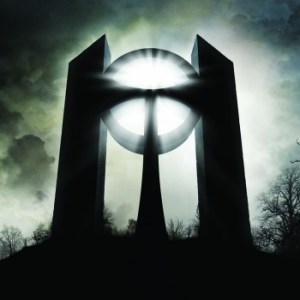 A quick peek at their discography will tell you it’s been 24 years since Amebix last put out a full-length album, putting them in a close second behind The Misfits for “Longest-Running Hiatus by a Punk Band” (since we can’t count any of the middling albums The Doppelgänger Misfits have put out in the last nearly-three decades). Unlike Misfits Nü, Amebix still is a punk band, and a startlingly proficient one at that. Sonic Mass is their first release on their own independent label, and features Rob “The Baron” Miller (returning from his career as an amateur sword-smith – seriously) and his brother Stig (not
  Transylvanilla