
Category Archives: Music Reviews

The Roots – Undun

I have black thoughts, therefore my name’s the same – Black Thought, off 2008’s “@15”

I always listen through an album at least three times before I commit anything to paper, that’s basic policy. Few albums make it past six, fewer still become rituals, enduring works that worm their way past the review process to install themselves in my listening regiment (and on my iPhone) as I gradually unravel their intricacies. Undun is one such album – in fact, you’re safe assuming this review is a work in progress: The Roots have crystallized their trademark inventions into a conceptual powerhouse that seems to constantly beg re-assessment. Everyman Redford Stevens isn’t an enigmatic figure, and his story is (perhaps) a prototypical one, but it’s compelling. I keep going back through his reverse-narrative looking for details, digging for the causes to his downfall, each time returning with something different to turn over in my mind. Readers, consider this your teal deer (tl;dr): Undun is a dense and exciting little concept-album and it deserves a half-hour of your time. If you like thoughtful hip-hop that doesn’t compromise in the name of authenticity, this can be your winter joint. It’s dead short, so go spin it so that we can discuss it later – over Guinness and comics, perhaps.

This album’s been available for free online streaming for while now, so Roots fans are already going to know what I mean when I say that Undun is really brief (even disappointingly so), and more than a little strange. “Memento-style” gets thrown around a lot in critical reviews of this album (being critics’ favourite cinema reference after “Rashōmon-style”), and there’s an extent to which that’s true: Undun is the reverse-narrative of one Redford (“‘Hood Everyman”) Stevens, and it begins very emphatically and obviously with his death, marking an instant and refreshing reversal of the typical concept-album protagonist’s narrative. By now, readers, you also know that I love concept albums, and Undun doesn’t disappoint: by intentionally reversing the linear formula of thematically similar concept-works like The Wall and even Tommy, The Roots set themselves apart. The fate of their African-American protagonist is prefigured in the first instrumental track, and as an audience we’re left to pick up the pieces reverse-chronologically in order to figure this whole mess out; the results are predictably disorienting and relentlessly ominous. Another novel touch, the plethora of performers articulating Redford don’t go around blaming anyone the way Pink did back in the late 70’s: even to the extent of narrow-mindedness this is Redford’s story, and it centers around his decisions and his conditions. Undun is one black American’s struggle, beginning (that is, ending) with a lengthy piano suite, and ending (or beginning) with the silence of his death. So how does the eleven-strong Jimmy Fallon house-band go about sonically retelling the details of Redford’s downfall? To be frank, they hardly do at all.

Undun opens to silence, and then to the drone of a failed heart rate monitor and a partially back-masked instrumental, fading gradually into the strings and choirs and organs whose accumulation slowly immerses us into “Sleep”, the album’s proper starting-point. Because this is The Roots, the grand majority of the instrumentals on display are performed live, and as I’ve mentioned in several previous reviews, live instrumentals ground hip-hop – they have a way of forcing things down to street-level. As a result, even when Aaron Livingston breaks the ambience of the opening track, singing “I’ve lost a lot of sleep to dreams/And I do not miss them yet/I wouldn’t wish them on than worst of enemies/Let them burn, go from here/Like when autumn leaves”, the backing beat never loses itself to the poeticism of the lyrics; from the metronome snaps to the organ arpeggios, “Sleep” is ominous but unpretentious. It’s the moment before Redford dies, but Black Thought and co. keep things introspective and eerily quiet, it gives the audience foreboding when they might expect triumph (or vindication), and as is Undun’s thematic mantra, reveals effectively nothing as to Redford’s actual cause of death. Things (literally) come to life following that, as “Make My” flourishes out of a great guest verse by up-and-comer Big K.R.I.T., waxing materialistic-yet-thoughtful lines on his opener, “I did it all for the money lord, it’s what it seems/Well in the world of night terrors, it’s hard to dream/Hollerin’ cash rules everything, let’s call it C.R.E.A.M./cause when it rises to the top – you get the finer things”. The Roots’ resident MC, Black Thought, even thinks to remind us ahead of time that we won’t be fully assembling Redford’s story, that it’s an entirely intentional conceit: ““Unwritten and unraveled/It’s the dead-man’s pedantic” he tells us, preemptively denying answers to questions that nag the listener throughout Undun. “Make My” is comfortable and lush, a slow groove with shifting keyboards and Dice Raw thoroughly justifying his presence on the sung chorus – again taking the listener another step backwards into the life of Redford Stevens, further into his late-life introspection.

Intermission time. Basically, I can do this sort of writeup for every track of the album and end up with a 5000-word review (and believe me, the option’s tempting). Every track features gorgeous, full production (thanks in no small part to live-instrumentalism). Every track is introspective, here gloomy, occasionally celebratory (on the intermission-like “Kool On”). Every track features a glut of guest-artists that miraculously manage to sidestep the collaboration-effort feel that has, in the past, prevented me from fully enjoying The Roots’ efforts. “One Time” features a ?uestlove drum-line that opens like something off Rising Down. Several tracks feature sung Dice Raw choruses that have more or less completely legitimized him in my sight. “The OtherSide” is stark and crushing, with Just Blaze yelling on the intro and Black Thought channeling Redford (perhaps in his teens), claiming “You might say I could be doin something positive … But when that paper got low, so did my tolerance/and there aint no truth in the dare, without the consequence/Listen if not for these ‘hood inventions I’d just be another kid from the block, with no intentions”. It’s partially autobiographical, and like all of Undun it’s looming and desperate and gives almost no plot details at all. To get further into the lyrical inventions here would be to start block-quoting – which I’m going to staunchly oppose – but rest assured that the tone of personal advancement through criminal behaviour, of desperate situations and the seemingly-inevitable means invented to survive them, absolutely pervades this album. The helplessness and claustrophobia intensify as the listener nears the album’s closer, naturally expecting some twist-ending genesis to Redford’s downfall. By the time you hit the album’s final vocal line with Dice Raw’s “I’m just tryna tip the scales my way”, and hear it followed by four brief instrumental tracks, you realize the album offers no resolution whatsoever, and depending on your aesthetic leanings you’ll either be thoroughly perplexed or absolutely impressed (I know which I was).

So Undun is perplexing and contradictory, it denies itself a proper narrative in the name of generalizing and acting as a metaphor for the experiences the underprivileged and desperate in America; that much is clear. All of this it accomplishes as well as any other album I’ve heard, and it isn’t alone in it’s concept (The Roots themselves approach this topic constantly in their work). Of course, Undun isn’t a perfect album either – for instance it’s a gigantic downer, and despite one or two exceptions (“The OtherSide” and “Kool On”, tenuously) every track is depressing and realistic. Undun’s ‘hood dreams are locked firmly in the realm of reality, and for Black Thought et al. that reality is one of brief ecstasy, crime and premature death. Perhaps Undun is a quietly triumphant work (being, after all, a creation of African Americans that circumvented Redford’s destructive cycle), but it absolutely is a sad, slow album; for me, at least, it’s perfect somber Autumn music. The charge of pretension can be leveled at Undun (and, yes, this accusation sticks against all Roots projects), though I feel its complexity need not be a weakness. Undun isn’t condemning, it’s staunchly realistic, and if it’s overarching gloominess proves too much to bear, evoking those emotions is well within Undun’s artistic intent. More problematic is the fact that Undun has blinders on: there are no women here, no secondary characters (if you assume all collaborators are articulating in the character of Redford, as the album seems to intend), no concrete plot details or resolution, no family or friends. It can be argued the album even loses focus of its reverse-chronological conceit halfway through, though the finale brings everything into focus. Regardless, Undun is, very emphatically, one lonely doomed man’s gradual slide into death. Redford is a prototype and a metaphor, and apparently for that reason The Roots opt to excise almost all specific details of his life from the album (though we know he’s a poet, writer, and comics fan, and the music videos fill out his character even more). It makes for an isolating listen, and it undeniably hinders the experience in a sense – for some its limited lyrical scope will significantly impact their enjoyment. Likely for these same reasons, I’m again obligated to mention that Undun is just short as heck. Clocking in at a slim 38 minutes, closer to 30 if you discount the instrumental tracks, ‘concept-EP’ might be a better way of explaining The Roots’ thought-process here. Personally I’ve found their sprawling, lengthy discography to be a hindrance in the past, but certainly for full asking price listeners are getting an uncharacteristically slim amount of content here.

Undun is an unapologetic art piece. It’s short and narrow-minded, conceptually dense, sad and desperate. This is all to say that I’ve really enjoyed it, but it falls far outside the norm (even for an album by The Roots). You have to know what you’re getting into here: it’s slim profile and status as The Roots’ first and only concept-album are inevitably going to set it apart from their catalogue. If anything I’ve written here sounds appealing to you, Undun might be exactly what you need. And if it sounds like a pretentious art-piece that drags The Roots and their pack of collaborators off to a haughty place you’d rather not see them go? Well, there’s always last year’s How I Got Over.

9.0

Originally published right here, December 2011. 

Tagged , , , , ,

Rammstein – Made In Germany

So sixteen years later, Rammstein finally releases a greatest hits compilation + 1 (“Mein Land”). Is it an essential document? Why not – the crunchy, dancy Germans have been a fixture of the post-industrial dance scene for a long time now, and their legions of fans and pyrotechnic live shows firmly affix their right to drop a collection of their greatest-appreciated hits. The quick verdict reads as such: if you don’t know Rammstein yet, this certainly isn’t a bad way to get acquainted. If you’re a collector, the bonus disc is packed with an hour of more or less every Rammstein remix (and the odd reimagination) you’ll ever need, and legend has it there’s a super-ultra-special-deluxe edition floating around with three DVDs chronicling nearly every music video they’ve ever made. However, if you’re a Rammstein neophyte, and their four-on-the-floor stomp and techno-leanings don’t really “do it” for you, you can safely avoid this one. Rammstein is absurdly consistent to the extent that many of their songs are indistinguishable to a non-German-speaking listener, and many of the remixes are incremental dance spinoffs of the originals, meaning that if you simply don’t like Rammstein, this isn’t going to change your mind. Made In Germany isn’t necessary, it isn’t comprehensive, and it isn’t particularly eye-opening, nor are the remastered versions on display here enormous improvements on the original mixes. To the extent that all this is true, I say Made In Germany is exactly as advertised: bite-size Rammstein for people that already love Rammstein, and are fans of neat packaging (and who isn’t?).

Disc 1: Like so many listeners, I was introduced to Rammstein in highschool, well after their career and fame had begun to develop (thanks to an entrepreneuring Trent Reznor nod on the Lost Highway soundtrack). This meant that Herzeleid, Sehnsucht, Mutter and Reise Reise were already out; this meant that I already had everything I needed to construct 90% of Made In Germany. And so I did, and I liked it, and in a sense that’s the end of this story. For the uninitiated, Rammstein is emphatically Neue Deutsch Harte, or ‘New German Hardness’: it’s industrial-tinged metal infused with a heavy, heavy dosage of electronic dance production. If that sentence turns you off, you can more or less ignore Made In Germany and go read my Deconstruction review (or YouTube their live performances, enjoyable by all metal fans); this collection isn’t going to change your mind. As a teen, though, I landed square in Rammstein’s sights: the odd combination worked, and Rammstein successfully became the first non-english band whose lyrics I can still recite by memory (the N64’s Mystical Ninja music notwithstanding).

As a collection, Made In Germany functions well enough. The majority of the tracks here (“Links 2-3-4”, “Ich Will”, Mein “Herz Brennt”, “Mutter” and “Sonne”) are drawn from Mutter, which makes sense – it’s their most critically-acclaimed album. “Du Hast” and “Engel” make their obligatory appearances, as do “Pussy” and “Rosenrot”. Speaking of Rosenrot, to my disappointment the eponymous track is the only cut from that album, leaving out a couple of personal favourites of mine – “Mann Gegen Mann” and “Benzin”, dealing with homophobia and oil, respectively. Every Rammstein fan, ex or current, is going to have an opinion on the track-listing here, though the compilation-closer “Mein Land”, with it’s bouncy synthesizers, fits nicely as a capstone to the whole project and a suitable reminder that – unlike so many other artists, Marilyn Manson – that a greatest-hits collection doesn’t necessarily spell death for a group’s career.

So the track listing is respectable enough – how are the tracks themselves? Their Rammstein, duh, and that means something very specific: four-on-the-floor. No Rammstein listener, new or old, can deny they have a signature sound. By ‘signature sound’, I mean ‘absurdly consistent’. If you don’t look up the surprisingly clever lyrics (typically filled with double-entendres, puns and social criticism), the chances of your mistaking one track for another or another (and so on) will increase significantly; a good portion of Rammstein’s success can be credited to their having perfected a distinct style and having clung to it as a drowning man might cling to floating wreckage (for better or worse). Sadly, stripped down to a greatest-hits compilation, the sequencing of these tracks almost necessarily cancels the inclusion of Rammstein’s more experimental (and by extension stylistically exciting) tracks, with the notable exceptions of “Rosenrot”, “Amerika” and “Mutter”. For this listener, that’s the sad reality of the greatest-hits format – I’ve always been of the opinion that these guys were one wild producer and a couple of collaborations away from making a really cool concept-album. Of course, that doesn’t happen here, and as a result you’re getting straight remastered power-Rammstein that at times exposes their weaknesses; though if you’re an uninitiated fan – and so haven’t played some of these tracks to death already – that likely won’t be an issue.

All in all, the critical failing of Made In Germany’s main listening experience (disc 1), is that I more or less compiled it at thirteen, and those four tracks that didn’t yet exist were easily swapped out other favourites (or, say, Eminem – I was 13, guys). Made In Germany isn’t bad, but it isn’t interesting or particularly vital either: it’s a document in the history of an extremely charismatic group, and I’m glad they’ve fired it off, but in Rammstein’s case a greatest-hits compilation only serves to amplify their weaknesses. There’s nothing here exciting or well-sequenced enough to stop me from throwing on Rosenrot or Mutter to get my Neue-Deutsch-Harte-on.

Disc 1 (the album proper) is getting a 6.5: just fine, but just fine.

Disc 2: Hey, it’s a handy little remix album, featuring what we can only assume is the definitive collection of Rammstein remixes! Do you know about Rammstein remixes? If you do, then you know they tend to get played during the ‘generic goth-club’ scene of many an action film  (XXX, Black Leather Fight-Time 7). This is not a compliment. This means that a band that already features a heavy techno/disco undertow is being swept entirely into the current, almost to the point of eye-rolling self-satire (for example, let’s all try and sit through Scooter’s “Pussy” remix). Yes, a lot of these toe the line all the way into completely absurd repetition territory, the sort of thing you can only stand “at da (apparently goth) club”, and even then only if your friends are already dancing and drinks are involved.

Rare and wonderful exceptions come from those artists willing to break the mold and either subvert the songs or embellish upon them: Faith No More turns “Du Riechst So Gut” into something resembling a late-night radio broadcast, complete with crackles and murky, shifting keyboards. Pet Shop Boys take “Mein Teil” (thoroughly disturbing video warning!) straight to the poppy, disco-happy territory that someone might claim they’ve always threatened to enter. Devin Townsend pulls the same trick (to much better effect) on his hilarious and banjo-inflected “Rammlied” remix. Meshuggah earns a special mention for isolating the vocals on “Benzin” and playing all the instruments themselves, meaning that it is now a Meshuggah song, and the result is appropriately entertaining. The absolute highlight arrives when Laibach, long known for their impressive (bizarre, absurd, subversive) covers breaches “Ohne Diche”. “I cannot exist without you” becomes “You cannot exist without me”, a guest female vocalist shows up to deliver the trademark chorus, the instrumentals are entirely reproduced by Laibach themselves; what could have been another tepid, industrial-tinged remix blossoms into a full-blown cover-duet that handily stands alongside (and may for many entirely outclass) the original.

Ultimately, the second remix disc, like so many supplementary remix discs, is completely optional. There are some neat tracks on here, though you aren’t likely to get the sort of traction out of them that demands nearly doubling Made in Germany’s asking price. There are some really cool moments here (all of which can be re-lived through YouTube), however five (of seventeen) thoroughly creative tracks aren’t enough to carry a largely unoriginal hour-and-a-third into necessity territory. An extensive curiosity, and potentially a must-have for collectors, but this supplementary disc fails to add anything essential to Made In Germany beyond the reminder that Rammstein has always led a double-life as both industrial-metal(-dance) act and a full-on club entity. Interesting, and an inevitable part of their history, but not a bonus I’d recommend trading additional currency for.

Disc 2 is getting a thorough 5.5: neat moments, overall complete mediocrity.

The sum total: 6.5

Originally published right here, December 2011. 

Tagged , , , , ,

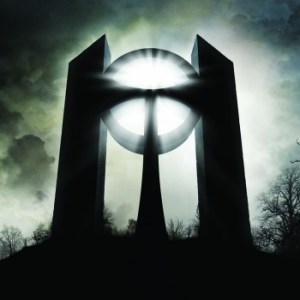
Amebix – Sonic Mass

A quick peek at their discography will tell you it’s been 24 years since Amebix last put out a full-length album, putting them in a close second behind The Misfits for “Longest-Running Hiatus by a Punk Band” (since we can’t count any of the middling albums The Doppelgänger Misfits have put out in the last nearly-three decades). Unlike Misfits Nü, Amebix still is a punk band, and a startlingly proficient one at that. Sonic Mass is their first release on their own independent label, and features Rob “The Baron” Miller (returning from his career as an amateur sword-smith – seriously) and his brother Stig (not that Stig) teaming up with Stone Sour drummer Roy Mayorga to effectively school everyone in the art of aging gracefully and redefining their band’s relevancy while successfully approaching grandfather-age. Of course, if you’re simply listening to it, none of this matters: Sonic Mass transcends all expectations and reveals itself as an exciting, suitably epic piece of work from a band that must have decided to take that quarter-century off to make sure things got done right.

Without knowing their history (as I initially didn’t), you’d be forgiven for assuming Sonic  Mass was the emerging debut album of some The Sword and Mastodon-influenced British heavy metal band. The riffs are sludgy and heavy, they’re dense and rife with distortion and repetition, and the vocal wails and growls are dead-set in their commitment to ancient rituals and Gods, warfare and the brotherhood of man. Amebix’s comeback work is a concept album, and it’s intricacies aren’t likely to be immediately apparent (don’t expect a plot summary here!). However, each successive listen reveals more and more of the rich sonic texturing and thematic polemic going on in Sonic Mass. As the title might suggest, this is straight headphone-music: given a second (third, eighth) listen, the crushing repetition on tracks like “Sonic Mass Part 2” gives up hidden technicalities and depth – you begin to notice the triplets in the drum-line shifting back and forth, the way the lead guitar decays into the background off the chorus, that the lyrics aren’t generic anti-God warfare; they’re a protest against the generational violence perpetuated by man-made religious institutions – apparently all religious institutions, throughout history. They’re a call for a return to human solidarity: “We all were brothers once/and shared the secrets of the stars/one thousand years ago/and now we die for this black blood” The Baron sings in his guttural timbre over “Sonic Mass Part 2”’s bulldozer riffs. His obvious vocal similarities to Motörhead come out on tracks like “God of the Grain”, where he evokes Lemmy to position himself as all Gods; “For I was here before all time/I am the center of the flame/Every age shall know my name” he howls, listing off several of his allegedly synonymous names, calling on history’s cyclical fascination with deities, implicitly protesting it. They find time to deal with the genesis of man (on the gorgeous “Days”), the fall of universal brotherhood (“The Messenger”, “Sonic Mass Part 2”), the ravages of warfare and hatred (“Here Come the Wolf”), and finally a climactic awakening on “Knights of the Black Sun“. Sonic Mass is a thematic juggernaut of an album, uniting the human condition of all eras, lamenting that whatever human unity that must once have existed has been forever lost to cyclical conformity, factionalization and warfare – and of course that’s just a surface summary.

For all this heady concept-album positioning, accusations that Amebix might be pretentious or inaccessible spring to mind. I make no secret of my love for concept-work: I own the Mars Volta discography, I thought Die Antwoord made sense, I liked “808s and Heartbreak”, but Amebix sidesteps these accusations through sheer listenability. Sonic Mass, to any fan of sludgy metal, will prove a totally enjoyable (if crushing and epic) assault. It draws itself into subtlety and atmospheric suites when necessary (as on the album’s opener and closer), it fades between dynamics, and it plain manipulates chord-repetition in a more engrossing way than I’ve heard all year. And then, without warning, it will drop into some kickass metal (that, as is so rarely the case, also happens to be mature and intelligent). All this, and it’s still punk: while not as obviously anarchic as their previous work (remember, that was the 80s), their thematic content and polemic lyricism retains those connections while trading crust-punk thrash for densely produced heavy metal – hear some and you’ll see what I mean. Sonic Mass is epic, it’s empowering and it’s relevant, and coming from such a long-defunct band it could easily have been a dull cash-in. It absolutely isn’t. With Sonic Mass, Amebix reintroduces itself to the music scene, and does a damn respectable job of it.

8.5

Originally published right here, December 2011. 

The Reviewer’s Integrity Act says I can’t change grades after the fact, but after much deliberation (and a conversation with Ryeburg), I think Sonic Mass deserves an upgrade to: 

9.0


Tagged , , , , ,
Design a site like this with WordPress.com
Get started