Tag Archives: 2011

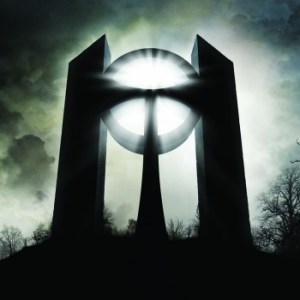
Amebix – Sonic Mass

A quick peek at their discography will tell you it’s been 24 years since Amebix last put out a full-length album, putting them in a close second behind The Misfits for “Longest-Running Hiatus by a Punk Band” (since we can’t count any of the middling albums The Doppelgänger Misfits have put out in the last nearly-three decades). Unlike Misfits Nü, Amebix still is a punk band, and a startlingly proficient one at that. Sonic Mass is their first release on their own independent label, and features Rob “The Baron” Miller (returning from his career as an amateur sword-smith – seriously) and his brother Stig (not that Stig) teaming up with Stone Sour drummer Roy Mayorga to effectively school everyone in the art of aging gracefully and redefining their band’s relevancy while successfully approaching grandfather-age. Of course, if you’re simply listening to it, none of this matters: Sonic Mass transcends all expectations and reveals itself as an exciting, suitably epic piece of work from a band that must have decided to take that quarter-century off to make sure things got done right.

Without knowing their history (as I initially didn’t), you’d be forgiven for assuming Sonic  Mass was the emerging debut album of some The Sword and Mastodon-influenced British heavy metal band. The riffs are sludgy and heavy, they’re dense and rife with distortion and repetition, and the vocal wails and growls are dead-set in their commitment to ancient rituals and Gods, warfare and the brotherhood of man. Amebix’s comeback work is a concept album, and it’s intricacies aren’t likely to be immediately apparent (don’t expect a plot summary here!). However, each successive listen reveals more and more of the rich sonic texturing and thematic polemic going on in Sonic Mass. As the title might suggest, this is straight headphone-music: given a second (third, eighth) listen, the crushing repetition on tracks like “Sonic Mass Part 2” gives up hidden technicalities and depth – you begin to notice the triplets in the drum-line shifting back and forth, the way the lead guitar decays into the background off the chorus, that the lyrics aren’t generic anti-God warfare; they’re a protest against the generational violence perpetuated by man-made religious institutions – apparently all religious institutions, throughout history. They’re a call for a return to human solidarity: “We all were brothers once/and shared the secrets of the stars/one thousand years ago/and now we die for this black blood” The Baron sings in his guttural timbre over “Sonic Mass Part 2”’s bulldozer riffs. His obvious vocal similarities to Motörhead come out on tracks like “God of the Grain”, where he evokes Lemmy to position himself as all Gods; “For I was here before all time/I am the center of the flame/Every age shall know my name” he howls, listing off several of his allegedly synonymous names, calling on history’s cyclical fascination with deities, implicitly protesting it. They find time to deal with the genesis of man (on the gorgeous “Days”), the fall of universal brotherhood (“The Messenger”, “Sonic Mass Part 2”), the ravages of warfare and hatred (“Here Come the Wolf”), and finally a climactic awakening on “Knights of the Black Sun“. Sonic Mass is a thematic juggernaut of an album, uniting the human condition of all eras, lamenting that whatever human unity that must once have existed has been forever lost to cyclical conformity, factionalization and warfare – and of course that’s just a surface summary.

For all this heady concept-album positioning, accusations that Amebix might be pretentious or inaccessible spring to mind. I make no secret of my love for concept-work: I own the Mars Volta discography, I thought Die Antwoord made sense, I liked “808s and Heartbreak”, but Amebix sidesteps these accusations through sheer listenability. Sonic Mass, to any fan of sludgy metal, will prove a totally enjoyable (if crushing and epic) assault. It draws itself into subtlety and atmospheric suites when necessary (as on the album’s opener and closer), it fades between dynamics, and it plain manipulates chord-repetition in a more engrossing way than I’ve heard all year. And then, without warning, it will drop into some kickass metal (that, as is so rarely the case, also happens to be mature and intelligent). All this, and it’s still punk: while not as obviously anarchic as their previous work (remember, that was the 80s), their thematic content and polemic lyricism retains those connections while trading crust-punk thrash for densely produced heavy metal – hear some and you’ll see what I mean. Sonic Mass is epic, it’s empowering and it’s relevant, and coming from such a long-defunct band it could easily have been a dull cash-in. It absolutely isn’t. With Sonic Mass, Amebix reintroduces itself to the music scene, and does a damn respectable job of it.

8.5

Originally published right here, December 2011. 

The Reviewer’s Integrity Act says I can’t change grades after the fact, but after much deliberation (and a conversation with Ryeburg), I think Sonic Mass deserves an upgrade to: 

9.0


Tagged , , , , ,

Akira The Don – ATD 26: Manga Music

Ten years ago my oldest friend and I went down to Metrotown, a giant mall here in Vancouver. We wandered around for a while before hitting up the A&B Sound that used to be next door, which at the time was the joint for folks in search of cheap media. Forty bucks and a couple of hours later, he was the proud owner of Ninja Scroll. I took home Ghost in the Shell. A couple weeks later I bought more. And more. Later I’d discover online streaming, and scan-lated manga online, and then American comics, and then a class full of all that awesome stuff in University. That day, we’d begun our journey into full-on suburban white-kid anime obsession. Flash to present day and I’ve still got that copy of Ghost in the Shell – and it’s publisher, Manga Entertainment, is twenty years old. Did viewing Ghost in the Shell and Ninja Scroll at my young and impressionable age deeply alter my perspective on illustrated storytelling, the Japanese aesthetic, and foreign media in general? Absolutely. I’m not the only one, either: this autumn the appropriately-named Akira The Don drops his tribute to twenty years of Manga Entertainment, the studio that helped open the minds of (and in some cases defined) an entire generation of Western kids. Enter ATD 26: Manga Music.

So who the heck is Akira The Don?

ATD 26? The Don? What’s the deal with his accent? All valid questions – so let’s talk about Adam Narkiewicz for a minute. The man knows his marketing: he’s the proud admin of the only artist site I’ve ever actually bothered to browse more than once – it’s a treasure-trove of his crazy amount of projects. On “Golgo 13” he’s more than happy to remind us that he makes comic books, produces his own beats, sells shoes and clothing, raps, sings, mixes as a world-record-setting DJ, is a music journalist, is a cartoonist and animator, loved “Red Dead Redemption”, invented the free online mixtape back in ’04, produced his own magazine at 17… and the list basically goes on. First British artist signed to Interscope Records; first British artist to dump Interscope Records based on creative differences (read: corporate nonsense). He’s a Welsh guy. He’s a Bromwich guy. He used to sell drugs. He raps about proposing to his wife. He gives away an album-quality mixtape every now and then, and the next one, Saturnalia Superman: Akira The Don Salutes the Majesty of Christmas, is due in about a month. He’s a positive dude, and the friendliest Twitterer you’re now following. He’ll probably even read this and crack a grin at his extensive list of qualifications: the point of the matter is that Adam “Akira The Don” Narkiewicz works for his money, and for his work ethic alone makes himself well worth your attention.

If you’re sniffing out a cult of personality thing going on here, you’re right. A great deal of what makes Akira such an appealing figure is the casual frankness with which he discusses all this in his music – without mincing words I can say he’s the most approachable-sounding rapper you’re ever likely to listen to. There is absolutely zero pretension here. Who better to cut up a whole album constructed out of Manga Entertainment releases (or Street Fighter)?  Understanding who Akira is and why fans love him is an integral background to understanding what I’m about to say about Manga Music, which makes this the part where you say, “Right, Transylvanilla, so just how is the damn music?”

Oh, right. Back on topic.

Manga Music, like so many of Akira’s various projects, is available on his site for free – provided you’re comfortable with a one-track mp3. What this means for us is that I listened to it like a vinyl album: no track-skipping, no navigation, no clear way of telling which track I was on; just me and an hour of Akira and friends (complete with a topical record-sleeve). The consequence of listening through Manga Music like a suite is that the production gets drawn out – you realize that this is likely Akira’s finest-produced work yet. He’ll tell you on the second to last track that this was his first project produced with Logic, on a Mac (in lieu of Acid Pro, on a PC), and the difference absolutely shows. Sure it’s literally an hour of chopped anime samples, nicked from Manga Entertainment releases and strewn with hip-hop beats, but combined with Akira’s comfort on the boards, Manga Music takes on a strikingly organic feel. None of the beats or samples here ever feel forced: the female vocals pulled from “Full Metal Alchemist” are gorgeous and jive nicely in between Akira’s autobiographic rhymes and Time’s metronome delivery, “Golgo 13” drops brooding, bouncing synths that remind me of the Final Fantasy VII motorbike music, “Ghost in the Shell” samples a haunting vocal feature from the film’s intro, to great and epic effect. “Dominion Tank Police” finds time to include Sisters of Mercy sample that will have fans hopping out of their chairs and shouting “Aw COOL!” (just like I did). On “Afro Samurai” Akira even comes up with a reason to sing us a little Cat Stevens – it’s a testament to his growing skill as a producer that none of these samples or loops ever feel gimmicky or out-of-place. On ATD 23: A Tribute to the Music of Street Fighter some of the beats were clear experiments or fun asides; here on ATD 26 every single track merges into a cohesive whole, each one one happily playing off of that bombastic musical atmosphere that Japanese anime has long-since established as its trademark. Manga Music’s production is tight, it’s focused – if only the samples had cleared, The Don could very easily have charged full-price for this.

So the production is gorgeous. How’s the rapping? It’s pretty solid. When Jack Nimble drops “dodging clockwork killers and tick-tocking geurillas” on “Ghost in the Shell”, the imagery is powerful, it’s concrete, cemented by his exaggerated, matter-of-fact flow. Akira himself makes a highlight out of “Full Metal Alchemist” – sure he’s referencing his drug dealing past, but it’s his honestness, his glamour-less exposition that gives his work it’s power; he’s as comfortable reminding us that shouldn’t have survived his lifestyle as he is regaling his (apparently awesome) wife on The Life Equation’s “Babydoll”. Envy’s missing from this album (which can’t count as a knock against it, since I just like Envy), but a special nod has to go out to Big Narstie, whom I’ve enjoyed more on this album than anything I’ve heard him on in the past. His voice is enormous (he isn’t small, either). He oscillates between an all-out vocal assault that borders on anguish (his Twitter signature is #PAIN), and surprisingly nimble imagery – on “Ninja Scroll” he not only finds time to sing the chorus, but deliver the line “A snake for a penis – is this a nightmare?” in such a way that we actually take it seriously. “Urotsukidoji” features Littles – and at times stands a chance of reminding you of Frank Ocean – combining a handily sung chorus with hazy production and slurred, drunken delivery of his and Akira’s apocalyptic rhymes. Even at it’s most serious, everyone on Manga Music sounds like they’re having a blast – a sensibility that’s long been Akira’s signature. It isn’t that the album is free of subtance – far from it (though there is the usual mixtape reliance on guest-spots, whose varying quality may turn off some), but there’s a clear love of the craft here. There’s real merit in The Don’s arguments against major-label deals, if it results in raps as comfortable and solid as this.

ATD 26: Manga Music isn’t my favourite Akira the Don project (a 29+ project discography will do that), but from my (incomplete) experience, it’s his most structurally cohesive work since When We Were Young. It features his greatest achievements in production (ATD 25 being a close runner-up), a point that guarantees its must-have status amongst Manga Entertainment devotees, but surprisingly opens it up to a wider audience as well. Akira takes his time on this one, he lets the beats ride out long after the verses expire, he takes the time to produce largely instrumental tracks with “Macross Plus” and the extensive vocal intro on “Urotsukidoji”. To the one-track listener (like myself), this proves greatly rewarding: not only does Manga Music hold your attention, but it functions handily as a suite (if not quite a concept album). If you haven’t discovered Akira the Don and his giant back-catalogue of freely-accessible music, now is the time. If you’re already a fan of his whatever’s-going-on-in-my-life rap style and unconventional production (for some an acquired taste), you’re in for a treat. ATD 26: Manga Music is an album-quality mixtape, from a man who has made a habit of producing album-quality mixtapes, and puts much of the free mixtape scene to shame. Put it on gratis, let it (digitally) spin for an hour, and then feed him some digital money for the high-quality downloads. Manga Music is worth our collective attention.

A-

(I told Akira that I was hoping I’d be able to rate ATD 26 on a scale of FRESH to DOPE, so let me break character for a moment here to say that ATD 26 “be like on some Rotten Tomatoes; Certified FRESH.” ) 

Originally published right here, November 2011. 

Tagged , , , , ,

BrokeNCYDE – Guilty Pleasure

Every now and then, I make something like a critical dare against myself: Can you listen to ICP for 36 hours straight, breaking only to sleep? Can you make it through Eminem’s discography while playing Oblivion?  How much Jingle Cats can you play before the family cat finally snaps? All of these questions had answers, and the answer was always yes. Last night I made myself another dare: I dared myself to review a BrokeNCYDE – or BC13 – album. I don’t know what the acronym stands for and neither do you, but I know this record is as much of a drain on my psyche as any sequence of sounds I have ever heard.

Listening to BrokeNCYDE will give your pets illnesses. 

I’m dedicated to providing reviews that are fair, subjective assessments: I’m never going to be completely objective (no critic can be), and my personal taste is always going to intrude to some extent. However, I will always be fair – I’m under the impression that you value this. Rarely can I bring myself to call an album an objective failure. I usually pepper these sentiments with phrases like “to its core audience..” or “taken as a satire…”, tempering out my distaste in the name of fair coverage. These devices fail me with Guilty Pleasure. I think I may finally have found a truly bad album, and not just a bad album but an actively destructive one: an aggressively insipid piece of work that is everything from poorly performed to uncomfortably predatory. But I digress.

Listening to BrokeNCYDE will crash the economy. 

BrokeNCYDE, whose name I am getting tired of typing, is a group of young men from Albuquerque, New Mexico, whose fascinations range from alcohol to teen girls to fashion, all of which is clearly evident from their album case. They would very much like to be a Crunkcore band, and perhaps at one point were one: Crunkcore is an offshoot of southern Crunk hip-hop music, steeped in the guitar-stomp and screamed vocals of the Hardcore and Screamo genres. Let’s stop for a moment and consider what that might sound like. Are you picturing Lil’ Jon in skinny jeans, screaming out his heartache from atop his drive-in garage? You’re damn close. On paper, that idea is hilarious. I am laughing right now. Hilarious ideas are not bad ideas! They simply demand a different approach, a more subtle, nuanced, self-aware touch in order to succeed. Is that the sort of touch our friends in BrokeNCYDE possess? Oh hell no.

Listening to BrokeNCYDE will ruin your family.

Let’s review some lyrics, shall we? Here we go: “She’s a beast that bootie is bigger than a moose,” “I’m on top of her, she’s on top of me,” “Why are people hating on me – is it ‘cause I’m so good looking?”, “The party won’t stop til 5am tonight” (he means tomorrow morning). Noticing a trend? No? Let’s try one more: “Stupid fucking bitches, go and do my dishes”. Waaaait a minute. Each of these quotations is from a different track (telling you which would ruin the surprise, as they all sound identical), but what’s more emphatic is the sheer sexism. Pure idiotic adolescent misogyny, spilling from every corner of this album.

Let’s find a girl performing any action that doesn’t involve sex or drinking. Nope!

Let’s find a reference to any girlfriend, any relationship of any sort anywhere on this album. Nope!

Let’s find a girl’s name on this album. Nope!

Okay, so at this point maybe I just look like a hip-hop luddite: “But Transylvanilla,” your inner Snoop Dogg fan might cry (Snoop Dogg: actual literal pimp for a while there), “isn’t there rampant objectification of women in basically all hip-hop?” “There sure is,” I shout back, “and that’s an essay for another time!” Of course hip-hop has issues with this sort of thing (it’s one of hip-hop’s major remaining issues), and of course it needs to be discussed and approached in a thoughtful manner (which, in the case of many artists, it is). Does that proliferation of casual sexism in any way justify what BrokeNCYDE is accomplishing when they throw “Stupid fucking bitches, go and do my dishes” over a sample of a girl crying? Absolutely not. In fact, it’s about four feet away from advocating abuse, which really isn’t helped by the constant explicit sexuality of this album, combined with every single track’s central imagery: getting super drunk, bro.

In fact, their vile sexism (raw and unvindicated, unlike, say, Childish Gambino’s) puts us in the position to ask two more very important questions: what are their songs actually about, and who is their target audience? Their songs, unequivocally, are about themselves – and I mean literally. In fact, on one of only two tracks in which a man briefly speaks softly to a woman, before reverting to himself (“Ocean View”, one of two tracks whose production actually diverges from the dead-cheap Crunk pack), we get this clever quip about two minutes in: “The party won’t start til I walk in” (and this is after he seduces her with whispered Coldplay lyrics. Really.). So much for that girl you were chatting up a minute ago, Se7en (or is it Mikl, or Phat J?). It’s enough to make the audience wonder just what it is they have to prove here: even the ICP knows enough to actually incorporate imagery and deviant song-structures into their music. Alright, so it’s heavily, heavily narcissistic music about how many girls each of them imagines they’ve had sex with. Who’s their target audience, then? Let’s look at them. Any ideas? Take a look back at the album cover. Take a peek at  their lyricism, their clothes, their bargain-bin beats, their band name (broke-inside). That’s right, guys and gals: this is heavily sexual music, with misogynistic overtones, coated in booze, aimed directly at teens too young to drink. Holy crap. Well that’s disconcerting.

Listening to BrokeNCYDE will cause your friends to abandon you.

Hold on, though, maybe I’m coming off as too much of an Old Man here. I don’t want us to censor BrokeNCYDE, I don’t want to ban their sales to minors or whatever, but literally all the evidence points in a really disconcerting direction. They call their fans “girlies”. They’re about one degree away from the levels of predatory intimation Blood on the Dance Floor once famously reached. Wait though: maybe their creepiness will be okay if we can find some positives to this album! Let’s search for them, maybe it’s a concept album or something! We’ve got our work cut out for us. Certainly the super-generic beats are danceable enough, provided that you don’t mind the lead singer’s(?) voice sounds like Kermit the Frog’s nasally-voiced nephew, that only one of these guys can rap (“Doin my Thang”, a rare crack at legitimacy), and that the production is just dirt cheap. These songs happily stumble along, strapped to disconcertingly familiar chords and hooks (alongside cookie-cutter crunk-ery), but with absolutely no ingenuity, innovation or ambition to actually do anything.  None of these tracks make an attempt to articulate anything at all, and even their proposed party-atmosphere comes off intensely cheap, like they don’t even care. It’s like the most tepid, suburban house-party imaginable, and they’re all pretending the apple-juice is Cognac. BrokeNCYDE spend so much time warding off ‘haters’ it’s ridiculous, and only “U Mad Bro”, their potshot at internet trolls, actually comes off as if it were composed in the real world. It acknowledges their detractors in what could have been a really effective troll track – if it weren’t brutally misogynistic and blisteringly stupid (“I be on that space shit. You be on that gay  shit”). They’re even too disorganized to bother sticking to their proposed genre – the only track that actually seems to include the ‘core half of Crunkcore is the last one, which comes as close as this album ever does to fulfilling whatever sad promise these guys once had. Even then, it does so with squeal-y screams that lack charisma, artfulness, or any of those other important traits of, you know, effective hardcore music.

Listening to BrokeNCYDE will crap your pants.

I could rant all day on these guys. I more or less already have – so what’s the verdict on the music this ridiculously lazy band clearly dreamed up in someone’s basement with the intention of scoring with “girlies” (*shudder*)? It’s a fail. Of course it’s a fail, but it’s such a resounding fail. BrokeNCYDE is one producer and a sense of humour away from being a hilarious self-parody, and to an uninitiated listener that’s exactly what tracks like “Girls Girls Girls” and “Whoa!” are going to sound like. Seated deep, deep inside BrokeNCYDE’s endless folds of stupidity, there is the promise of an absolutely picture-perfect spoof-band. It’s just a shame they take themselves too damn seriously to realize that. I’m not against offensive music, I’m not against controversial or ‘fringe’ music, and I’m certainly not against bizarre music: my beef is with lazy music. If the headlines weren’t enough to tell you this by now, BrokeNCYDE is insipid, it’s vile, and it’s worth a laugh at its expense.

Want dance tracks full of sex? Try Ke$ha. Want to laugh at some guys doing their damnedest to write some hip-hop? You’ve got the ICP. BrokeNCYDE contribute nothing at all, and at best might provide some cheap laughs. The sort you need to cry a little bit after.

F

And they say I have trouble writing a negative review. Originally published here: November 2011.

Tagged , , , ,
Design a site like this with WordPress.com
Get started